
When should your child see an orthodontist? The American Association of Orthodontists (AAO) recommends every child have a first orthodontic evaluation by age 7. At Limbaugh Orthodontics in Huntsville, this age-7 checkup helps us spot bite issues early, even if treatment isn’t needed for years.
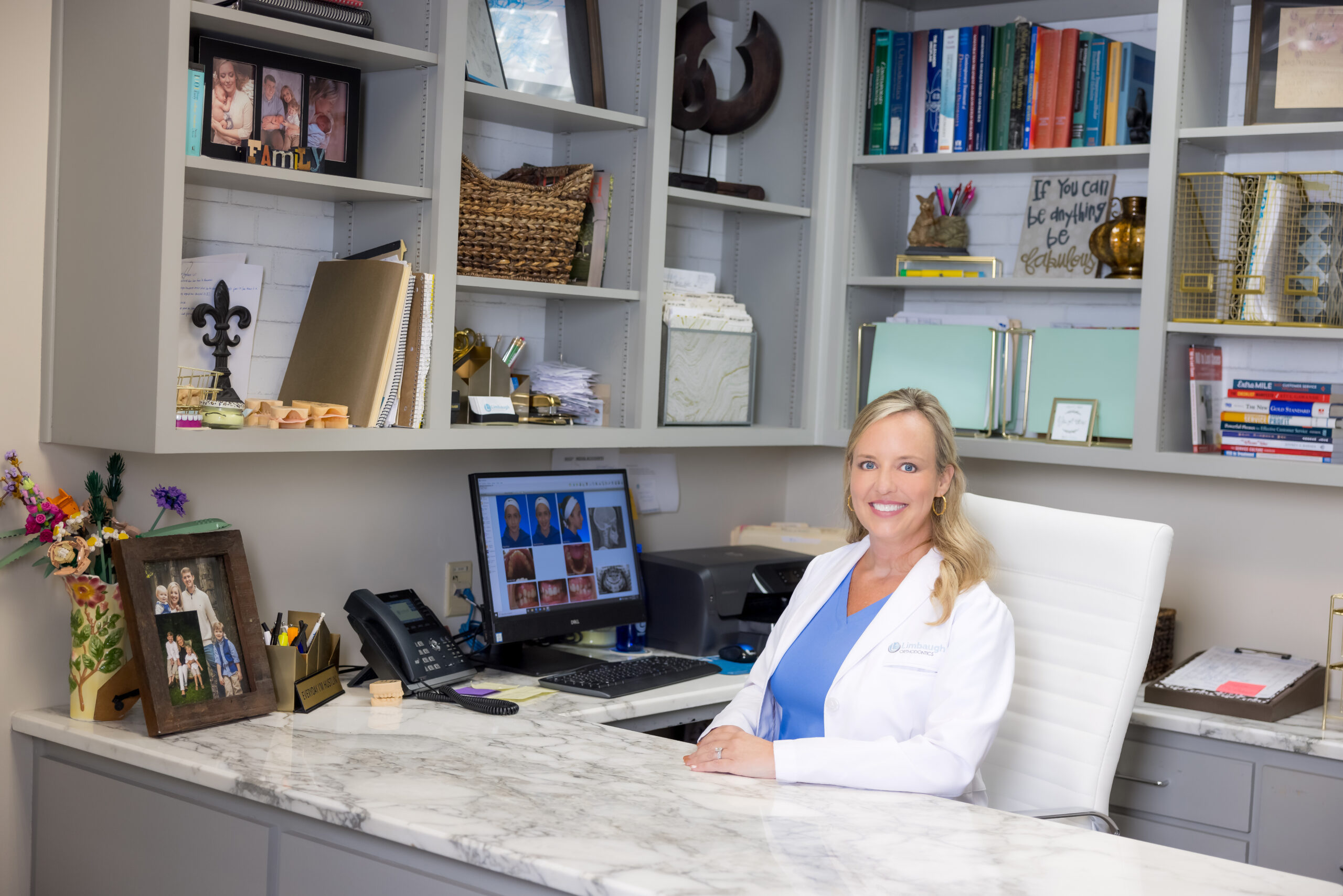
By first or second grade, your child’s first adult molars and front incisors have usually come in. That mix of baby and permanent teeth gives Dr. Lindsay Limbaugh, a board-certified orthodontist, a clear window into how the bite is developing. We can see jaw growth patterns, crowding risks, and alignment concerns that aren’t visible later.
Here’s what surprises most Huntsville parents: an early evaluation rarely means early braces. The vast majority of 7-year-olds leave their first visit with an “all clear” or a simple plan to check in once a year. Early visits are about watching, not rushing.
You don’t need a referral from your pediatric dentist, and your first consultation at Limbaugh Orthodontics is complimentary, whether you come to our Huntsville office or meet with us virtually. If your child is in first or second grade, now’s a good time to schedule.

What Happens at the Age-7 Checkup: A Step-by-Step Walkthrough
The age-7 visit is short and designed to feel more like a meet-and-greet than a medical appointment. Most families are in and out within 30 to 45 minutes.
Here’s what to expect, step by step:
- Welcome and health history. Our team greets your family, gives your child a quick tour, and reviews a short dental and medical history form. Nothing scary, just the basics.
- Digital X-rays and photos. We use digital radiography and digital photos to capture clear images of your child’s teeth, bite, and facial structure. These images use less radiation than older systems and give Dr. Limbaugh a detailed look at what’s happening under the gums.
- Clinical exam. Dr. Limbaugh checks jaw growth, tooth eruption patterns, bite alignment, and any habits like thumb-sucking or mouth breathing. She also looks at how the upper and lower jaws fit together.
- Doctor consultation with you. This is where we sit down together and talk through what we found. You’ll see the images, hear what’s developing normally, and learn about anything worth watching. Bring your questions.
- Clear next steps. You’ll leave with one of three plans: an “all clear,” an observation schedule (we see your child once a year as adult teeth come in), or a Phase 1 treatment recommendation if a developmental issue needs attention now.
No pressure, no sales pitch. Just honest guidance.
Benefits of an Early Orthodontic Evaluation
Even when braces aren’t on the horizon, an early evaluation gives your child a head start. Catching small issues before they grow into bigger ones can save time and discomfort down the road.
Here’s what early evaluations can do:
- Spot bite problems while jaw bones are still growing. Crossbites, underbites, and narrow palates respond well to gentle guidance when bones are soft and malleable. Waiting until the teen years often means more complex treatment.
- Guide adult teeth into better positions. When Dr. Limbaugh can see where permanent teeth are heading, she can sometimes recommend small interventions that reduce the need for extractions later.
- Address habits before they shape the jaw. Thumb-sucking, tongue-thrusting, and persistent mouth breathing can change how the jaw develops. Catching these habits early allows for simple, non-invasive help.
- Shorten or simplify future treatment. Many kids who have Phase 1 treatment need shorter or less complex braces or Invisalign treatment in their teen years.
- Protect protruding front teeth. Kids with front teeth that stick out are more likely to chip or break them during sports or playground tumbles. Early evaluation helps us flag this risk.
- Build confidence and comfort. A young child who meets the orthodontic team early, enjoys the visit, and leaves with a sticker tends to grow up with less dental anxiety.
Early orthodontic care isn’t about fixing something that’s broken. It’s about helping your child’s smile develop as naturally and healthfully as possible. For some kids, that means acting now. For most, it means keeping an eye on things with annual check-ins.
Phase 1 vs. Phase 2 Treatment: What’s the Difference?
Phase 1 treatment happens between ages 7 and 10, while a child still has baby teeth and growing jaw bones. It focuses on skeletal and bite issues. Phase 2 treatment usually begins around age 11 or later, once all permanent teeth have erupted, and focuses on aligning those teeth into a finished, functional smile.
Most children only ever need Phase 2. Phase 1 is reserved for specific developmental concerns that benefit from early intervention.
Here’s a side-by-side look:
| Feature | Phase 1 (Interceptive) | Phase 2 (Comprehensive) |
|---|---|---|
| Typical Age | 7–10 years old | 11+ years old |
| Goal | Guide jaw growth, correct bite issues | Align all permanent teeth |
| Common Appliances | Palatal expanders, space maintainers, habit appliances, limited braces | Full braces or Invisalign |
| Duration | Usually 6–12 months, followed by observation | Typically 12–24 months |
| Who Needs It | Kids with crossbites, severe crowding, narrow palates, or harmful oral habits | Most teens who need orthodontic treatment |
Dr. Limbaugh, who is board certified by the American Board of Orthodontics, carefully evaluates whether a child truly needs Phase 1 treatment. We don’t recommend early treatment unless it will meaningfully improve the outcome. If observation is enough, that’s what we’ll suggest.
Think of Phase 1 as foundation work and Phase 2 as finishing work. Not every house needs foundation adjustments, but when it does, early attention makes everything that follows easier.

Insurance and Payment Options for Huntsville Families
At Limbaugh Orthodontics in Huntsville, your child’s age-7 consultation is free, whether you visit our office at 600 Airport Rd. SW or meet with us through a virtual consultation. If Phase 1 treatment is recommended, we’ll walk you through your options before anything begins. No surprises.
A few things that help Huntsville families plan for treatment:
- Insurance benefits. Many dental insurance plans include a lifetime orthodontic benefit. We work with Advantica, Aetna, Anthem, Cigna, Delta Dental, Guardian, Humana, MetLife, Principal, United Concordia, and UnitedHealthcare.
- HSA and FSA funds. Orthodontic treatment is typically an eligible expense.
- Flexible monthly payments. We offer interest-free in-house financing designed to fit real family budgets.
- Paid-in-full option for families who prefer to pay upfront.
Transparency in financing is one of our core values. You’ll always know what your options are and why.
Signs Your Child Should See an Orthodontist Now
Not every child shows obvious signs that an orthodontic visit is needed, which is why the age-7 checkup matters even without symptoms. If you notice any of the following, it’s a good idea to schedule sooner rather than later:
- Crowded, overlapping, or clearly crooked teeth as adult teeth come in
- Early or late loss of baby teeth (before age 5 or lingering past age 7)
- Difficulty chewing, biting, or breathing through the nose
- Mouth breathing or persistent thumb-sucking past age 5
- Jaws that shift, click, or pop when your child opens or closes their mouth
- Protruding front teeth, an underbite, or a visible crossbite where the upper and lower teeth don’t line up correctly
- Speech difficulties that may be tied to tongue or jaw position
You know your child best. If something seems off, trust that instinct and bring them in. A quick evaluation can either confirm everything is fine or give you a clear plan forward.

Frequently Asked Questions About the Age-7 Orthodontist Visit
Should my 7-year-old see an orthodontist?
Yes. The American Association of Orthodontists recommends that every child have a first orthodontic evaluation by age 7. This doesn’t mean your child will need braces; it simply means an orthodontist can check for developmental issues while there’s still time to guide jaw growth. At Limbaugh Orthodontics in Huntsville, these first visits are free.
Can a 7-year-old go to the orthodontist?
Absolutely. Age 7 is actually the ideal time for a first visit because enough adult teeth have usually come in to reveal how the bite is developing. You don’t need a referral from a pediatric dentist. Parents in Huntsville can book directly with Dr. Lindsay Limbaugh.
Is it normal for a 7-year-old to get braces?
It’s uncommon. Most 7-year-olds who come in for an evaluation don’t need braces or any immediate treatment. They’re placed on a simple observation plan with yearly check-ins. Only a small percentage of children benefit from Phase 1 treatment, usually those with specific bite or jaw development concerns.
At what age should a kid see an orthodontist?
First evaluation by age 7, per AAO guidelines. If braces or Invisalign become necessary, treatment most often begins between ages 11 and 14, once all the permanent teeth have erupted. Teens and adults can absolutely start treatment later too. It’s never too late for a healthier, straighter smile.
Do I need a referral in Huntsville?
No. You can book directly with Limbaugh Orthodontics without a referral from your pediatric or family dentist. Many Huntsville families come to us on their own, and others are referred by their dentist. Both work.
What if my child is older than 7?
That’s completely fine. The age-7 recommendation is a starting point, not a deadline. If your child is 9, 12, or 16, an evaluation is still worthwhile. At Limbaugh Orthodontics, we create smiles for every age.
Ready to schedule your child’s first orthodontic evaluation? We’d love to meet your family. Visit Limbaugh Orthodontics at 600 Airport Rd. SW in Huntsville, or call us at 256-882-6000 to book your free in-office or virtual consultation. Live Life Smiling.

